Every week, someone asks me the same question: is ready-to-eat bird’s nest actually worth buying, or am I just paying for the glass bottle? It is a fair question. Ready-to-eat (RTD) bird’s nest costs more up front than loose dried nest, and there is a lingering belief that anything convenient must be inferior. After years of reading the labels, comparing price per gram, and yes, tasting a lot of bird’s nest, I can tell you the answer is more nuanced than a simple yes or no. In this article, we break down the nutrition and the real cost — so you can decide for yourself with the facts in hand.
Before you write it off as an overpriced convenience food, consider this: the global bird’s nest market has grown steadily for a decade, and ready-to-eat formats now account for the largest share of new products hitting store shelves. That growth is not driven by marketing alone — it reflects how the modern consumer actually wants to consume traditional wellness food. What you need is not another opinion piece. You need the numbers: what is in the bottle, what it costs to produce, what you actually pay, and whether the convenience premium is real or imagined. That is exactly what we are going to unpack, section by section.
What Is Actually Inside Ready-to-Eat Bird’s Nest?
Before we talk money, let us talk nutrients. The reason bird’s nest has been treasured for over a thousand years comes down to a handful of biologically active compounds that are genuinely rare in the food world. A high-quality ready-to-eat bird’s nest — one made from real edible nest, not just flavoring and sugar syrup — delivers the same core nutrients as freshly stewed or dried-and-prepared nest.
| Nutrient | Role in the Body | What It Means for You |
|---|---|---|
| Sialic Acid (NANA) | Cell membrane component, immune signaling | Supports immunity and cognitive function |
| Glycoproteins | Tissue building blocks | Supports skin elasticity and repair |
| EGF (Epidermal Growth Factor) | Stimulates cell growth | May support skin renewal and healing |
| Collagen | Structural protein in skin and joints | Contributes to firm, hydrated skin |
| Amino Acids | Protein building blocks | Support overall tissue maintenance |
| Calcium & Iron | Bone and blood health | Complement the mineral needs of the body |
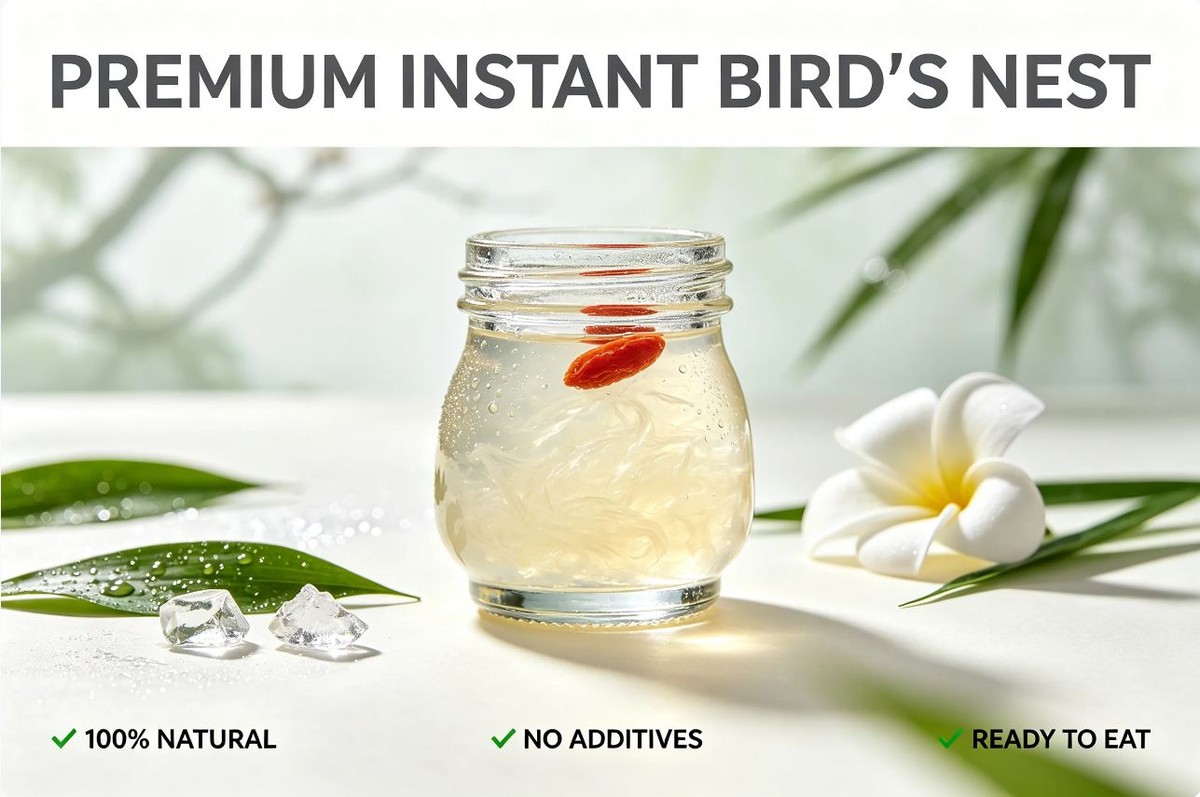
The critical point is this: the nutritional profile is determined by the bird’s nest solids in the bottle, not by whether the product was prepared in a restaurant kitchen or a certified factory. What matters is the solid content — the actual amount of bird’s nest in each serving. A premium RTD bottle with 500-1000mg of nest solids per 70ml is nutritionally comparable to a bowl of freshly double-boiled nest with the same dry weight.
The Real Cost: Beyond the Price Tag
Now for the part everyone actually cares about — the money. When people compare RTD to dried bird’s nest, they usually compare raw price per gram and conclude dried is cheaper. But that comparison ignores everything that happens after you buy it. Let us lay out the full picture.
| Cost Factor | Ready-to-Eat | Dried Bird’s Nest | Fresh Stewed (Shop) |
|---|---|---|---|
| Up-front price per serving | $6 – $9 | $5 – $8 | $8 – $12 |
| Preparation time | 0 minutes | 5-7 hours | 20-30 min wait |
| Hidden losses | None | 20-30% weight loss during soaking | Minimal |
| Consistency | Standardized | Varies batch to batch | Varies by chef |
| Storage | 12-18 months shelf stable | Needs dry, cool storage | Must consume immediately |
| True cost per serving | $6 – $9 | $7 – $11 | $8 – $12 |
Let us run a concrete example. Suppose you want a daily serving of bird’s nest, 30 days a month. With ready-to-eat, that is 30 bottles at roughly $7 each — about $210 a month, and every serving is actually consumed. With dried bird’s nest, a 50-gram pack at $300 might seem cheaper per gram, but after soaking losses of 20-30% and the reality that busy weeks mean skipped batches, you might realistically get 25-30 servings instead of the expected 50. That pushes the effective cost to $10-12 per serving — and only if you have the hours to prepare it. The economics of consistency quietly favor the bottle.
Once you factor in preparation time, waste, and the cost of a mistake (burn a pot of dried nest and that $40 is gone), the price gap that seems so obvious on paper narrows dramatically. For many people, the Pure Bird Nest with Rock Sugar at around $6-9 per bottle ends up being the most cost-effective way to consume bird’s nest consistently.
Convenience Is a Feature, Not a Compromise
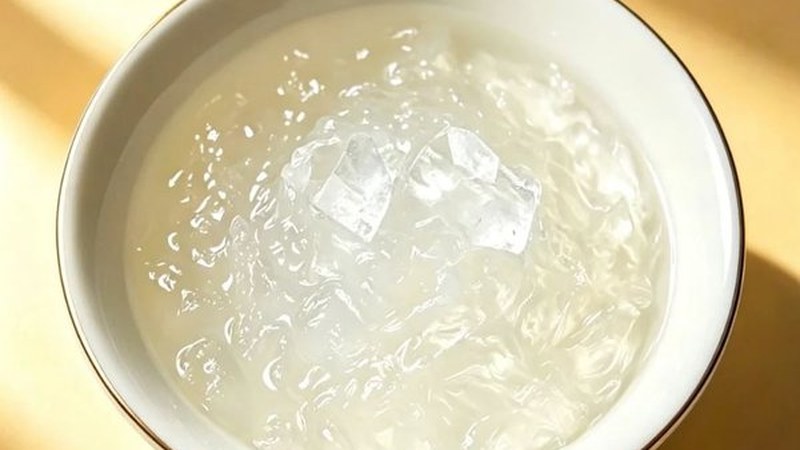
Here is the thing nobody says out loud: most people who buy dried bird’s nest do not actually eat it daily. It sits in the pantry. The soaking gets skipped. The “special occasion only” bottle lasts a year. Meanwhile, an RTD bottle in your bag or on your desk is consumed — which means you actually receive the nutritional benefit, every single day.
The three biggest advantages of ready-to-eat format:
- Daily consistency — A bottle on the counter is eaten; a bag of dried nest in the cupboard is forgotten. Consistency is what drives results in wellness.
- Portability — Office, travel, gym, school run — a sealed bottle goes anywhere. No bowl, no stove, no washing up.
- Portion control — Each bottle is a measured serving. You always know exactly how much bird’s nest you consumed.
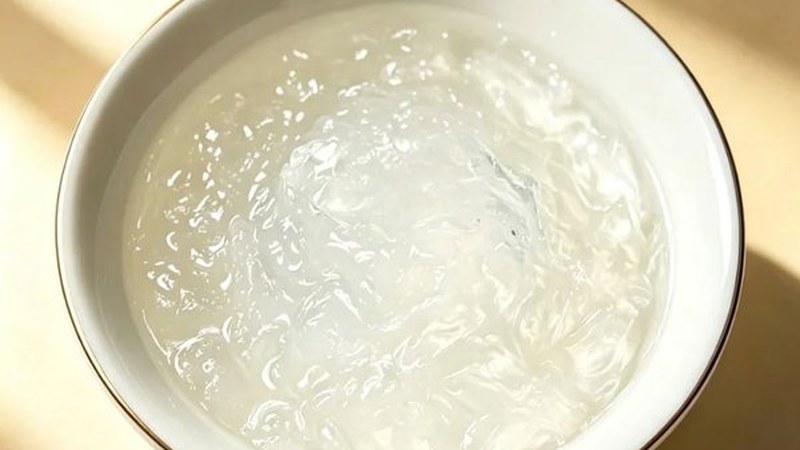
There is also the practical reality of storage. Dried bird’s nest is delicate — it absorbs moisture, picks up odors, and must be kept sealed in a cool, dry spot. One humid week can turn pristine white nests brittle or musty. Ready-to-eat bottles, by contrast, are vacuum-sealed and heat-sterilized, holding their quality for 12-18 months on a pantry shelf. You can stock up during a sale, keep a bottle at the office and another in your travel bag, and never think about spoilage. For anyone who has opened a bag of dried nest to find it has changed color or smell, that stability is worth real money.
How to Tell a Good RTD Bird’s Nest From a Marketing Gimmick
Not every ready-to-eat bird’s nest is created equal. Some “bird’s nest drinks” contain more sugar and flavoring than actual nest. Here is what to check before you buy:
- Bird’s nest content per serving — Look for the milligram figure on the label. 500mg or more per 70ml bottle is a good starting point; premium products offer 800-1000mg.
- Ingredients list — The shorter, the better. Ideally just bird’s nest, rock sugar or honey, and water. Walk away from long lists full of thickeners, artificial colors, and flavorings.
- Sourcing and certifications — Trustworthy brands display HACCP, ISO, or GMP certification and are transparent about where their nest comes from (Indonesia and Malaysia are the top producers).
- Texture in the bottle — You should see actual strands of bird’s nest, not just cloudy liquid. The strands should hold their shape when you pour.

Who Should Choose Ready-to-Eat Bird’s Nest?
Ready-to-eat bird’s nest is not for everyone — but it is for more people than most realize. It makes the most sense for:
- Busy professionals — If your mornings are a sprint, a bottle of Bird Nest Milk Drink is a nourishing start that takes five seconds to open.
- New parents — Sleep is short and hands are full. RTD removes the preparation burden entirely.
- Frequent travelers — A sealed bottle survives a flight and fits in a carry-on without leaking.
- Those new to bird’s nest — RTD is the easiest, lowest-commitment way to see if bird’s nest agrees with you before investing in a large bag of dried nest.
- Gift buyers — A beautifully packaged Fresh Bird Nest Gift Box communicates care without requiring the recipient to spend hours in the kitchen.
On the other hand, if you genuinely enjoy the ritual of soaking and double-boiling, or if you are preparing bird’s nest as a shared family dessert, dried nest still has a place. And for a special occasion, nothing beats the theatre of fresh stewed nest at a fine dessert house.
One of the biggest mistakes new users make is quitting after a week because they did not notice any change. Wellness foods work on a cumulative curve. Traditional Chinese dietary practice recommends consuming bird’s nest consistently for at least two to three months to observe its benefits. A ready-to-eat format removes the most common reason people abandon that routine — the hassle. Because the daily effort is near zero, the habit is far easier to keep. That is arguably the single strongest argument for choosing ready-to-eat: not that the bottle is better, but that you will actually finish the bottle.
FAQ
Q1: Is ready-to-eat bird’s nest as nutritious as dried bird’s nest?
Yes, provided the solid content is comparable. The key factor is milligrams of bird’s nest per serving, not the format. A quality RTD bottle with 500mg+ of nest solids delivers the same sialic acid, glycoproteins, and collagen as freshly prepared nest of equal dry weight.
Q2: Why is ready-to-eat bird’s nest more expensive per gram than dried?
Because you are paying for processing, packaging, and convenience. The sterilization and sealing process that gives RTD a 12-18 month shelf life costs money. However, when you factor in the 20-30% weight loss of dried nest during preparation, plus your time, the total cost per serving is often comparable — or even in RTD’s favor.
Q3: How do I know I am getting real bird’s nest and not just syrup?
Read the label. Check the declared bird’s nest content (look for 500mg+ per bottle) and the ingredients list. Real RTD bird’s nest should show visible strands when poured, and the ingredient list should be short — bird’s nest, sweetener, and water.
Q4: Can I heat up a bottle of ready-to-eat bird’s nest?
Yes. Place the sealed bottle in hot water for 3-5 minutes (a warm-water bath), or pour the contents into a small pot and warm gently. Avoid boiling, which can break down the delicate nest strands.
Q5: How long does an opened bottle last?
Once opened, consume within 24 hours and keep refrigerated. An unopened bottle is shelf stable for 12-18 months in a cool, dry place away from direct sunlight.
The Bottom Line
Is ready-to-eat bird’s nest worth buying? If you value consistency, convenience, and actually finishing what you start — yes, absolutely. The nutrition holds up when you choose a quality product, and the true cost per serving is far closer to dried nest than the sticker price suggests. The bottle that sits on your counter and gets drunk daily will do more for your wellness than the premium dried nest that never quite makes it out of the pantry.
And if you are still on the fence, start small. Try a single bottle of a well-reviewed ready-to-eat bird’s nest for a week and pay attention to how it fits into your morning. If the ritual feels right, scale up; if it does not, you have lost very little. That is the beauty of the format — you can trial it with almost zero commitment, something no bag of dried nest or single trip to a dessert shop can offer.
Ready to give it a try? Explore our collection of ready-to-eat bird’s nest products — from the minimal Unsweetened Pure Bird Nest to the energizing Ginseng Bird Nest Tonic — and find the one that fits your routine.